HARTMUT SAILINGSources & context
The voyage begins

The First Passage

Milford Haven → Ilfracombe. A night when wind, tide, fatigue and failing systems changed the plan.
11–12 September 2026Beneteau First 325 · AuntjesseSolo
Milford Haven · 11 September

The waiting was over.

After days of rain, electrical work, provisioning and watching several weather windows, Hartmut left Milford Haven aboard Auntjesse. The larger plan pointed south toward Spain. A Coruña was the first major destination.

But the first night quickly became something else: a real shakedown of the boat, its systems, and the physical limits of solo sailing.

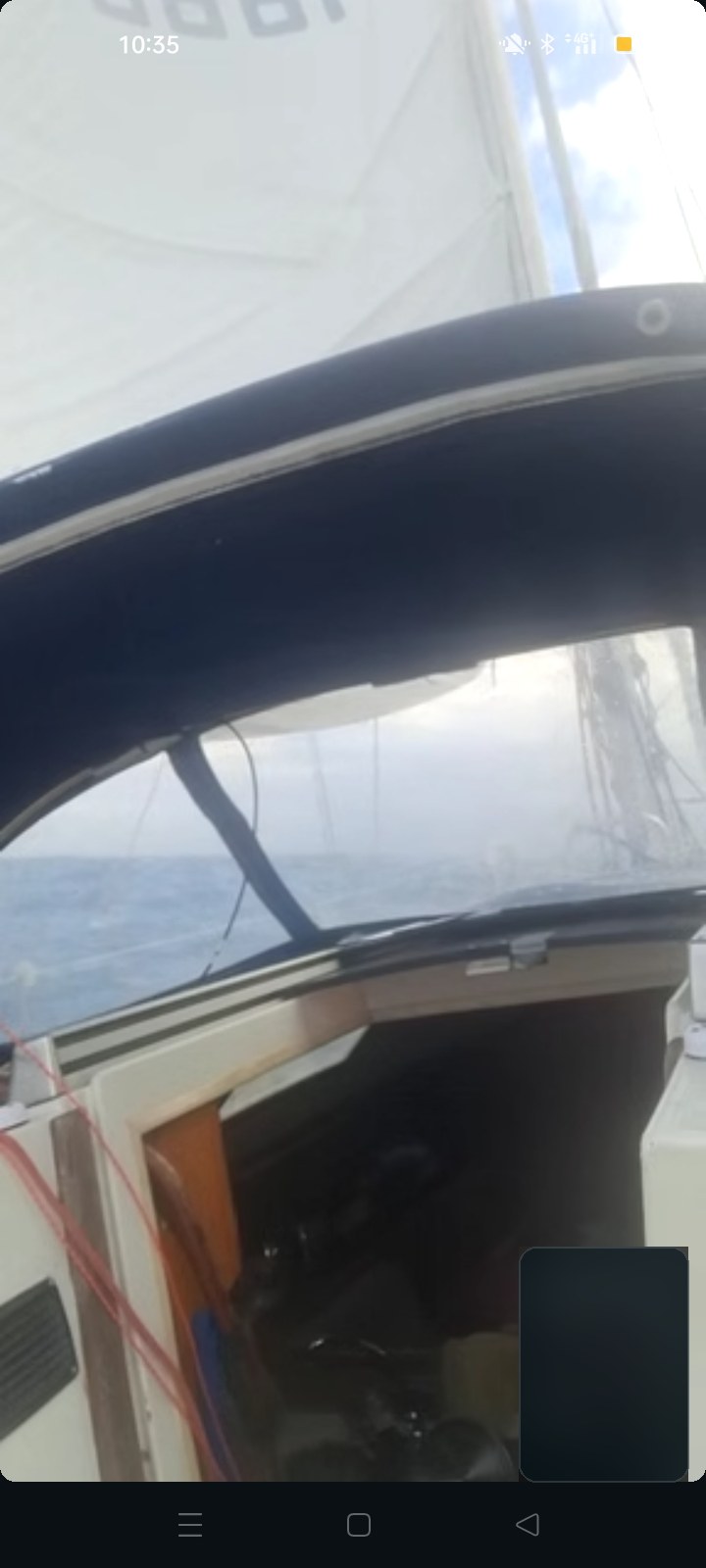
Hartmut in foul-weather clothing during the passage
Hartmut during the passage. The video-call self-view has been privacy-redacted for publication.
23:29 · Offshore

“Big swells… can't see a thing. No stars. Cloud cover.”

Message sent from Auntjesse · 11 September
23:30
Position transmitted: 51.549685, −5.4420495.
02:42
Another position south of the Pembrokeshire coast.
05:14
A new fix shows Auntjesse continuing through the night.
07:54
Attention turns from the original destination toward refuge options.
The track

A route that changed purpose.

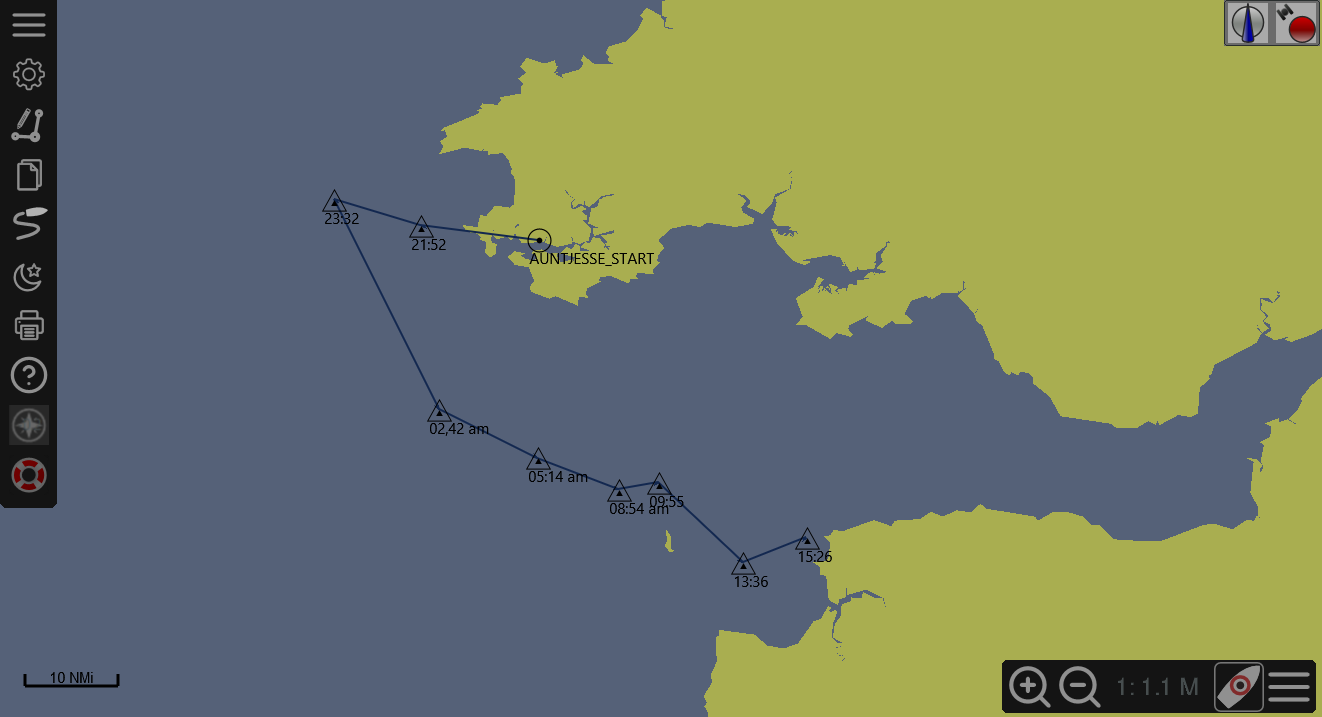
The shared position fixes show a passage that first pushes south and then bends east toward the North Devon coast. By morning the central question was no longer how to continue toward Spain, but where Auntjesse could safely stop.

Tracking map showing Auntjesse between Pembrokeshire and North Devon
Reconstructed from the position fixes exchanged during the passage. Intended as voyage history, not as a navigation chart.
Why this sea can become difficult

When wind meets tide

WIND →→→
≈≈≈
←←← TIDE
In a large tidal range, an opposing tidal stream can steepen and increase waves. The Bristol Channel also funnels flow between Wales and South West England; local wind, headlands, depth and tidal direction can make the sea experienced by a small yacht very different from a headline wind forecast.
Bristol Channel

The forecast was only part of the story.

The RYA specifically warns that wave height can increase significantly when tidal stream opposes the wind, with the effect stronger on larger-range tides. Around Ilfracombe, RYA cruising guidance describes tidal streams of about three knots; farther up-channel they can become much stronger.

Met Office material also notes that the estuary can funnel winds and create local convergence and heavy showers. Hartmut later reported gusts reaching approximately 35 knots during the passage.

35 kngusts reported by Hartmut
~3 kntidal stream cited near Ilfracombe by RYA
soloone person for helm, navigation, systems and decisions
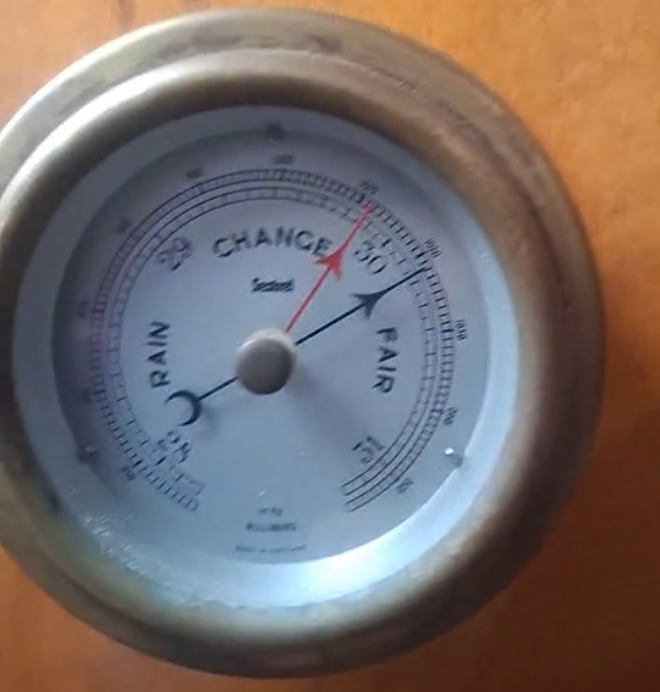
Onboard barometer
One of the onboard details documented around the voyage.
The real turning point

The sea was only half the problem.

The main weakness exposed by the first passage was electrical. According to Hartmut's account of the voyage, the onboard installation could not comfortably sustain the combined load of the navigation electronics and autopilot when everything was needed at once.

01Electrical load

The system struggled to support the instruments and steering equipment continuously.

02Autopilot

In the heavy sea Hartmut could no longer rely on automatic steering and took the helm manually.

03VHF

Communication equipment also gave trouble, reducing confidence in continuing offshore.

04Chartplotter

Plotter problems added another reason to seek a harbour where the navigation system could be checked.

Night · on deck

A wave tore the liferaft from its mounting.

In darkness, with the boat already difficult to control, a wave ripped the liferaft free from its attachment. Hartmut managed to recover it before it was lost and pulled it into the cockpit.

One problem arrived while another still demanded attention.

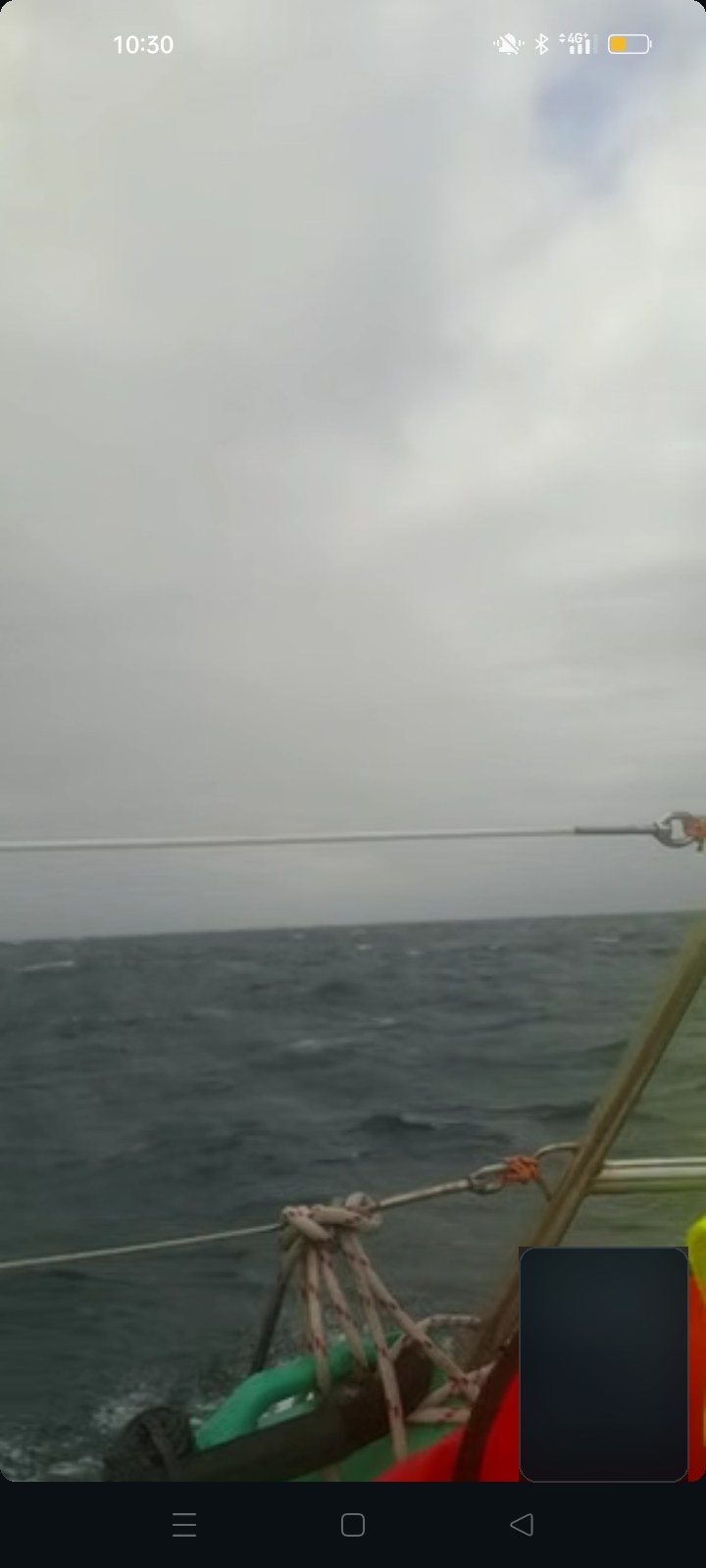
View from Auntjesse's cockpit in rough conditions
Cockpit view during the passage. Privacy-redacted publication copy.
Hand steering

In strong seas, the helm became a full-time job.

The boat was being pushed off course by the waves. An electronic pilot can react to changes in heading, but it does not visually anticipate each approaching crest in the way a helmsman can. In these conditions Hartmut hand-steered, reading the sea and trying to place the boat correctly on each wave.

For a solo sailor that decision has a cost: while both hands and attention are committed to the helm, there is no second crew member to navigate, check equipment, manage communications or rest.

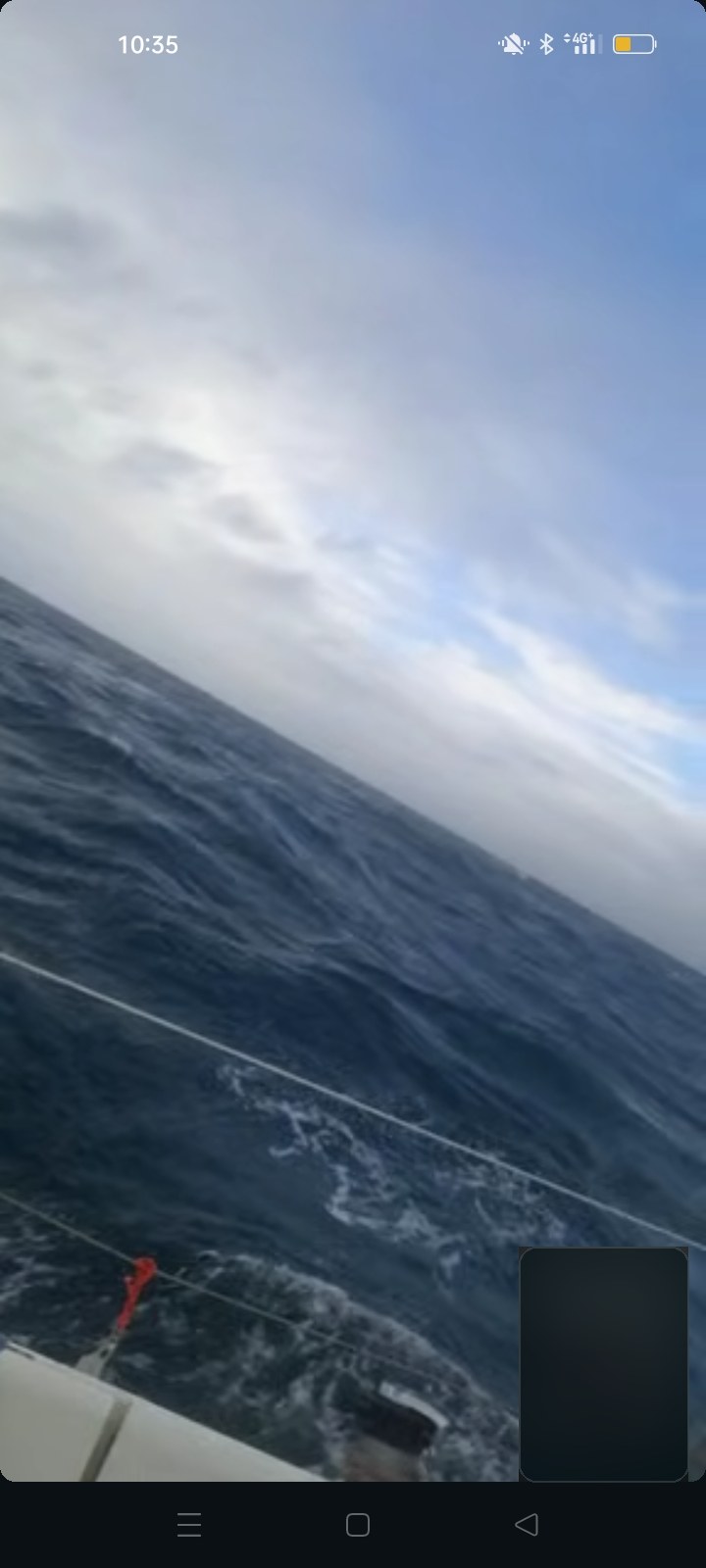
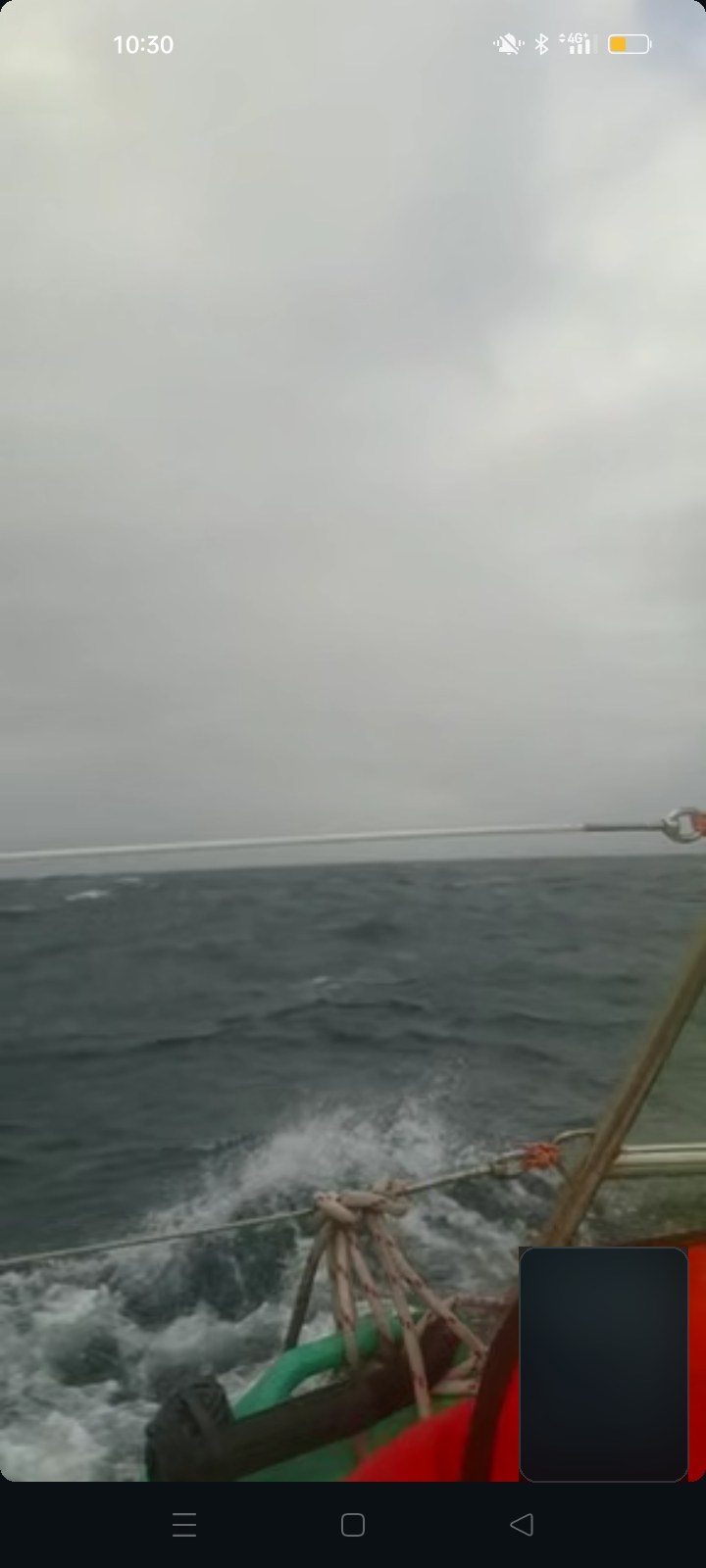
Rough sea during the passage
10:35 · The sea as seen during a call from Auntjesse. The self-view window has been obscured.
The human limit

Systems fail. Energy does too.

In difficult conditions, fatigue becomes part of the navigation problem. Every task that a crew could share falls to one person. The same sailor must steer, navigate, diagnose the electrical system, protect safety equipment, communicate and decide what comes next.

HelmNavigationPowerVHFSafety gearDecisionsNo second watch
12 September · Morning

The destination was no longer Spain.

With electrical limitations, problems affecting the VHF and plotter, the need to hand-steer and a night of hard work behind him, continuing the offshore passage no longer made sense. The new objective was simpler: reach a harbour, recover, and repair the boat.

New objective
Ilfracombe
North Devon · safe harbour and repairs
Approach

Ilfracombe was ahead — but still out of sight.

At 12:07 another position was sent. By 13:58 the contemporary calculation put Ilfracombe about 13.6 nautical miles away on a bearing near 072° true.

Hartmut had been steering around 100–110°. The exchange tried to orient him toward the harbour beyond Mortehoe and Woolacombe.

“Sorry can't see anything.”

Sea on the approach toward North Devon
The final messages in the exported log still have Auntjesse at sea.

Technical context & source note

The passage narrative combines the contemporaneous message/position log with Hartmut's later account of the equipment and liferaft events. The technical explanation of wind, tide and local weather is general context and does not reconstruct the exact wave field at Auntjesse's position.

Next chapter

Safe harbour. Repairs. Then another start.

Later on 12 September, Auntjesse reached Ilfracombe. The southbound voyage had paused — but it had also revealed exactly what had to be fixed before Hartmut could leave again.